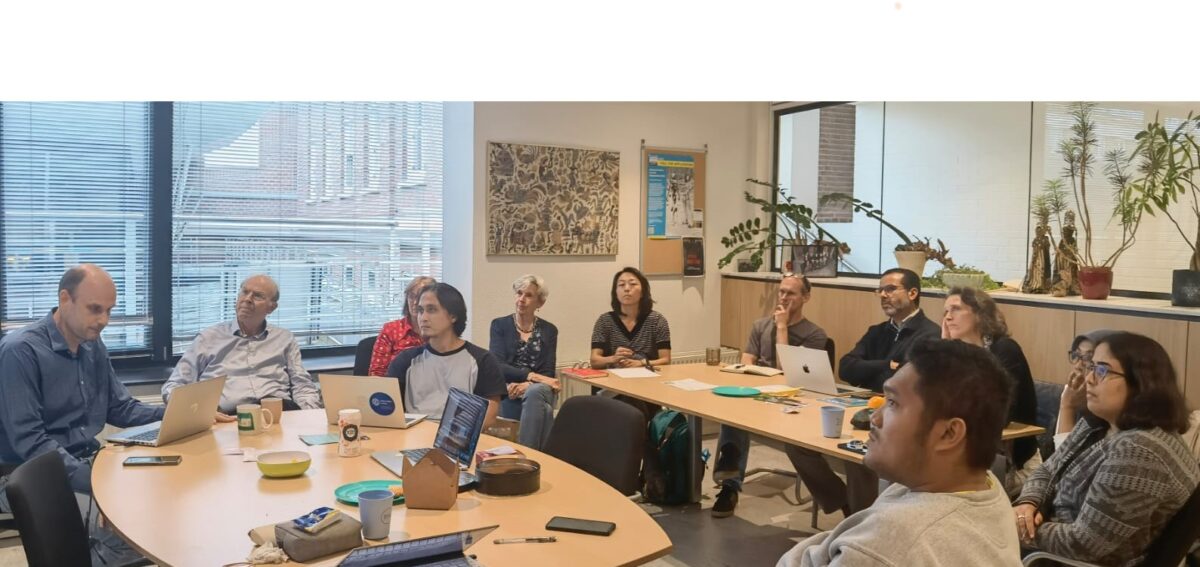









On 15 September 2026, Shidarta, a faculty member of the Business Law Department at BINUS University, was invited to deliver a keynote address at an international conference entitled “The Rule of Law and Democracy,” held at the University of Bengkulu (UNIB). The conference was officially opened by UNIB’s Vice Rector IV for Planning and Cooperation, Prof. Ashar Muda Lubis, S.Si., M.Sc., Ph.D. Also in attendance were the Dean of the Faculty of Law, Dr. M. Yamani, S.H., M.Hum., as well as senior professors Prof. Dr. Herlambang, S.H., M.H. and Prof. Dr. Emilia Kontesa, S.H., M.Hum.
In his keynote address, Shidarta argued that the contemporary era of the rule of law needs to be understood more specifically as an “era of code.” He defined code as “the architecture of cyberspace: the set of technical rules embedded in digital systems that enables, restricts, or shapes human behavior.” Drawing on Lawrence Lessig’s influential proposition that “code is law,” Shidarta emphasized that digital code increasingly performs a regulatory function, whether or not individuals are consciously aware of its influence.
Shidarta then elaborated on four modes of human–technology relations through which people perceive and engage with the world: embodiment, hermeneutic, alterity, and background relations. He argued that each of these modes carries particular risks for the formation and functioning of a democratic environment. As technology becomes increasingly embedded in everyday life, it does not merely mediate access to information; it also participates in structuring, filtering, and shaping the information through which individuals understand social and political realities.
According to Shidarta, the pervasive use of technology has consequently begun to distort the quality of contemporary democracy, particularly through its role in constructing and mediating information. What is commonly perceived as democracy, he argued, may in fact have shifted toward a form of pseudo-democracy, in which democratic appearances and procedures remain visible while the informational environment underlying individual choices and public participation is increasingly shaped by technological architectures. (***)