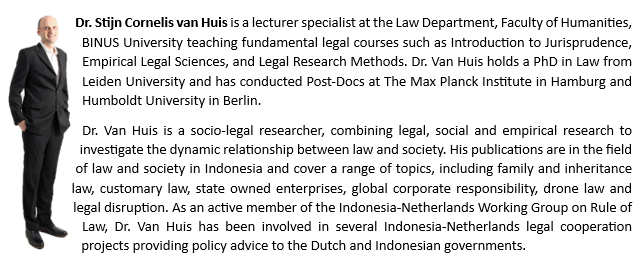






Oleh: STIJN CORNELIS VAN HUIS (April 2026)
Introduction
Since the 1990s multinational corporations (MNCs) have increasingly joined Global Corporate Responsibility (GCR) frameworks as global awareness of sustainable production has risen and stakeholders demand products made in socially and environmentally responsible ways [1] [2] [3]. This “eco‑awakening” spans high-, middle- and lower‑income countries [4]. GCR denotes an MNC’s pledge to promote good governance, labor rights, inclusion, and environmental sustainability across its operations and to be transparent and accountable through (self) reporting.
Scope and relation to CSR
GCR commitments are meant to extend throughout the supply chain—not only to subsidiaries but to first-, second- and third‑tier suppliers—so that sustainable and inclusive production practices are propagated beyond corporate headquarters. This wider remit distinguishes GCR from Corporate Social Responsibility (CSR), which is typically defined as a management approach integrating social and environmental concerns into business operations and stakeholder interactions [5]. Both GCR and CSR are generally forms of “soft law”: voluntary, self‑regulatory standards that exert moral and market pressure on firms to implement stated policies [6]. Non‑compliance rarely triggers direct legal sanctions unless laws are broken, but it can cause reputational damage or removal from GCR schemes.
Incentives
CSR and GCR initiatives are managed by central corporate offices but must be executed along the supply chain. Besides the ethical rationale, sustainable branding (e.g., eco‑friendly, fair trade) can enhance product value and marketability for the parent company and its subsidiaries [7] [8]. At the local level, MNCs can generate benefits—job creation, capital investment, technology transfer, and diffusion of inclusive norms—but may also cause harms tied to labor and environmental violations. High public visibility and reputational risk motivate leading brands to prefer suppliers with strong social and environmental records [9]. Yet in some developing-country contexts, MNCs have been implicated in rights abuses and environmental harm, sometimes through complicity with repressive governments or corrupt officials via subsidiaries or suppliers [10] [11].
Monitoring suppliers: an essential prerequisite
Effective GCR depends on supplier monitoring and transparent reporting. Disclosing first‑ and second‑tier suppliers enables civil society, consumers, and researchers to assess on‑the‑ground impacts and to detect whether responsible suppliers subcontract to less responsible firms [12]. Civil society and academia play complementary roles: civil society documents breaches and pressures firms to comply [13]; academia analyzes determinants of GCR/CSR effectiveness, cultural variations in CSR practice, and how GCR policies operate in practice [14]. Both need detailed supply‑chain data—a comprehensive list of subsidiaries and first, second, and third‑tier factories—to do this work.
Expectations and verification
After joining a GCR framework, an MNC is expected to select suppliers with strong sustainability records or to work with existing suppliers to improve performance on governance, labor, inclusion, and environmental metrics. Because many GCR schemes rely on self‑reporting, the transparency, accuracy and completeness of corporate disclosures are critical for consumers, civil society and researchers to verify whether firms are making substantive progress toward genuine sustainability.
The Global Corporate Responsibility Mechanism
In short, as depicted in the graph below, the GCR mechanism consists of five essential steps:
- A company institutionalizes GCR within its management. In its turn, this institutionalization of GCR requires that
- GCR has been included within the management of the MNC as one of the priority areas.
- A manager is responsible for the implementation of GCR policies within the MNC.
- The MNC implements policies in which suppliers are chosen based on GCR performance.
- The company publishes complete information about its supply chain. The names of the first and second-tier supply companies must be published so that independent monitoring regarding the sustainability of the production process (step 4) can take place. First-tier companies are companies that produce the products sold by the MNC, while second-tier companies are the companies that produce the materials for the 1st tier company.
- Sustainability reporting by the mother company, subsidiaries and suppliers. Annual reports by all companies in the supply chain follow international standards for GCR reporting (e.g. GRI standards). The companies report on social and environmental issues that have occurred during the production process and how these issues were (or are going to be) fixed.
- Monitoring by stakeholders, including government, shareholders, academia, civil society, and consumers. Traceability (step 2) and sustainability reporting (step 3) will allow all stakeholders to collect information about and verify the MNCs record (and openness) regarding:
- Good Corporate Governance,
- Inclusiveness,
- Corporate Social Responsibility
- and Social and Environmental Sustainability
- Know, Show and Fix [15]. When a company knows what goes on in its supply chain and commits to being transparent about this to all stakeholders (see step 4), this openness will create an incentive to make sure that measures are taken by the supply companies to fix the issue. Positive incentives include the increased value of green and fair-trade products, and a socially responsible and green reputation, while bad publicity and consequently stained reputation are negative incentives. Together these incentives and disincentives will stimulate more responsible and green business operations throughout the supply chain of MNCs that participate in GCR frameworks.

References
[1] Pope, Shawn, & LIM, Alwyn.(2020). The governance divide in global corporate responsibility: The global structuration of reporting and certification frameworks, 1998-2017. Organization Studies, 41(6), 821-854. Available at: https://ink.library.smu.edu.sg/soss_research/2948
[2] Lim, Alwyn & Kiyoteru Tsutsui. 2012. “Globalization and commitment in corporate social responsibility: Cross-national analyses of institutional and political-economy effects”, American Sociological Review, 77, 69-68
[3] Aguilera, R. V., Cuervo-Cazurra, A. “Code of good governance worldwide: What is the trigger?”. Organization Studies, 25, 2004, 415–443.
[4] Economist Intelligence Unit. (2021). An eco-wakening: Measuring global awareness, engagement and action for nature. WWF. https://wwf.panda.org/es/?2546466/An-Eco-wakening-Measuring-global-awareness-engagement-and-action-for-nature
[5] Amao. 2011 Corporate Social Responsibility, Human Rights and the Law: Multinational Corporations in Developing Countries. London: Taylor & Francis.
[6] United Nations Industrial Development Organization. “What is CSR?” Accessed April 22, 2026.
[7] Kalkanci, Basak, and Erica L. Plambeck. 2020. “Reveal the Supplier List? A Trade-off in Capacity vs. Responsibility”. Manufacturing & Service Operations Management. 22 (6): 1251-1267.
[8] Buckler S. (2017) Imagined Communities Incorporated: Corporate Social Responsibility and Value Creation in a Globalised World. In: Vertigans S., Idowu S. (eds) Corporate Social Responsibility. CSR, Sustainability, Ethics & Governance. Springer, Cham. https://doi.org/10.1007/978-3-319-35083-7_1
[9] Hasan, M. & Shi, Y. 2017. Corporate Social Responsibility in Garment Industry Supply Chain. Archives of Business Research, 5(7), 12-29.
[10] Hiller Connell, Kim Y., and Joy M. Kozar. 2017. Introduction to special issue on sustainability and the triple bottom line within the global clothing and textiles industry. Fashion and Textiles. https://doi.org/10.1186/s40691-017-0100-6.
[11] Adeyeye, Adefolake. 2007. “Corporate Responsibility in International Law: Which Way to Go?” Singapore Year Book of International Law. 11: 141-161.
[12] Caro, Felipe, Leonard Lane, and Anna Sáez de Tejada Cuenca. 2021. “Can Brands Claim Ignorance? Unauthorized Subcontracting in Apparel Supply Chains”. Management Science. 67 (4): 2010-2028.
[13] Jamali, D., Keshishian, T. Uneasy Alliances: Lessons Learned from Partnerships Between Businesses and NGOs in the context of CSR. Journal of Business. Ethics 84, 277–295 (2009). https://doi.org/10.1007/s10551-008-9708-1
[14] Matten, D., Moon, J. 2004. Corporate Social Responsibility. Journal of Business Ethics 54, 323–337. https://doi.org/10.1007/s10551-004-1822-0
[15] Fashion Revolution. 2023. Fashion Transparency Index 2023. Staffordshire (UK): Fashion Revolution. Available online at https://www.fashionrevolution.org/fashion-transparency-index/